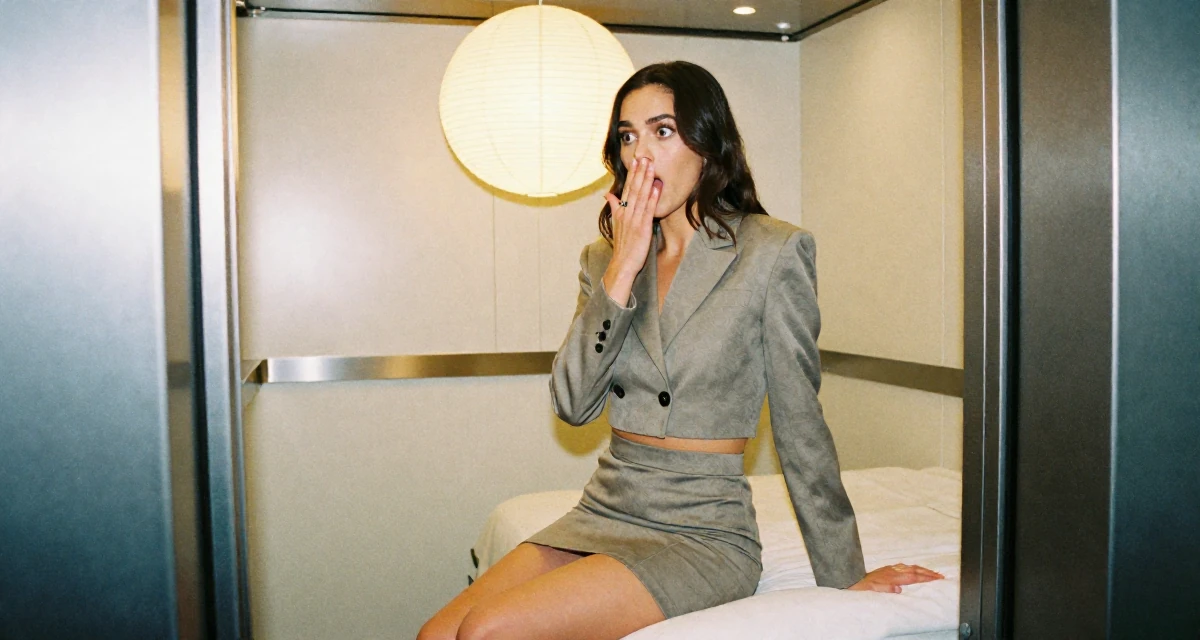
It’s 11:47 p.m. in the U.S., and your editing timeline is still open: a soft-glam bedroom set, warm lamp glow, the kind of intimate-but-not-too-much vibe you’re trying to perfect.
Then you see it. A message from a fan that’s not about your new post.
“Hey Emma… is it safe to use Premium right now? I saw something online.”
Your stomach drops—because you’re not “Emma,” and you’re not even sure what they mean. But you do know the feeling: that sudden, cold splash of internet chaos that can make subscribers hesitate, churn, or go quiet.
I’m MaTitie, editor at Top10Fans. And when creators DM me with “What is pornhub emma?” it’s usually not gossip—it’s anxiety. The phrase is showing up because “Emma” points to business reporter Emma Hinchliffe, who wrote about a classic Pornhub April Fools’ joke that spooked users for a minute. Lighthearted prank energy… but it lands differently when the same ecosystem is also dealing with heavier privacy headlines.
So let’s talk about both sides of “pornhub emma” in a way that actually helps you—the working creator who’s trying to build stable income in an economy that feels shaky, while also figuring out what your niche should be.
Because you don’t need more panic. You need clarity you can act on.
The “pornhub emma” moment: when a joke hits a nervous audience
Imagine your fan, thumb hovering over “renew,” already feeling cautious. They remember that April Fools’ prank Emma Hinchliffe covered—click a video, get hit with a page that looks like you just bought something expensive. For some users it was hilarious. For others, it was five years off their life.
Now layer that on top of another kind of fear: “If I click the wrong thing, will I be exposed? Will my email be tied to this forever? Will someone message me?”
This is the real creator problem: not whether a joke is funny, but whether your audience is emotionally comfortable enough to keep paying.
For a glamour-focused creator like you—soft, intimate themed visuals, curated, tasteful—the entire business runs on one fragile asset: trust.
And trust isn’t built by arguing online. It’s built by making the next step feel safe.
The scarier headline: breach claims and what fans think it means
Here’s the other reason “pornhub emma” triggers questions: people are mixing stories together.
A widely discussed report described a ransomware group claiming responsibility for a hack, with a dataset said to include user activity tied to Premium accounts—things like email addresses, location, video links and names, keywords, and timestamps. The report also noted some details (like search history) weren’t confirmed from the samples it reviewed.
Even if your fans don’t know the technical truth, they feel the emotional truth:
“If my private behavior can leak, I should disappear.”
And when subscribers disappear, creators feel it immediately—especially creators who are building consistency month-to-month and don’t have a giant buffer.
So let’s convert that fear into a plan you can actually live with.
A realistic scenario: your next 24 hours after a “Is it safe?” DM
You’re tired. You’re also smart. You don’t want to post a dramatic announcement that amplifies fear. You also don’t want to ignore it and look careless.
Here’s what I’d do if I were you—without pretending you can “solve” platform security from your bedroom studio.
Step 1: Don’t become a news anchor—be a calm host
Your fans didn’t DM you because they want a cybersecurity lecture. They want to know if you are steady.
A simple reply that works with your soft-glam brand:
- “I saw the headlines too. I can’t speak for the platform, but I care a lot about privacy. If you ever want to support without using a direct account email, I can share a few safer options.”
This does two things:
- It avoids claiming inside knowledge.
- It offers control—control reduces anxiety.
Step 2: Offer privacy-respecting support paths (without shaming)
Some subscribers will keep paying. Some will pause. Your job is to keep the relationship warm either way.
Offer options like:
- Using a dedicated email just for subscriptions (not their personal inbox).
- Using masked email tools (the consumer-tech world has been pushing this for exactly these moments).
- Turning off autofill for sensitive sign-ins on shared devices.
- Avoiding saving payment details in browsers on computers they don’t fully control.
Notice the tone: you’re not saying “If you’re scared, leave.” You’re saying “If you’re cautious, I respect that—and here’s how to keep enjoying the content with less worry.”
That’s how a soft-intimacy brand becomes a safe place, not a risky one.
Step 3: Quietly audit your own creator-side exposure
This is the part creators skip because it’s not sexy—but it’s the difference between a career bump and a career bruise.
Tonight or tomorrow, do a 20-minute audit:
- Is your creator email also used for banking, school, immigration paperwork, or job applications? If yes, separate it.
- Do you reuse passwords anywhere? If yes, stop.
- Is your creator name connected to a personal phone number on old accounts? If yes, start migrating to creator-only contact points.
You studied oil and gas management—you know what risk management is. This is the same skill, just applied to attention and identity.
The Mixpanel lesson: data tools are helpful… until they’re not
You also mentioned seeing an “incident at Mixpanel” floating around. Whether it’s Mixpanel or any analytics vendor, the creator takeaway is consistent:
When you track funnels—clicks, conversions, retention—be careful about what you collect and what you keep.
If you run any tracking for your own marketing (link hubs, landing pages, newsletters), your safest long-term strategy is:
- Collect the minimum data you need to run your business.
- Keep it for the shortest time that still lets you learn.
- Avoid storing sensitive attributes you don’t truly need.
This isn’t about becoming paranoid. It’s about being the kind of creator who can say—truthfully—“I run a low-data, privacy-respecting brand.”
That statement ages well. Especially when the economy feels unstable and subscribers are looking for reasons to reduce risk.
“Pornhub Emma” as a niche compass (yes, really)
Here’s the twist: this whole mini-storm can help you choose your niche direction.
When audiences feel unsafe, they move toward creators who feel:
- grounded,
- discreet,
- predictable,
- and emotionally calming.
That is basically your lane already: glamour-focused, soft, intimate visuals. Not chaotic. Not aggressive. Not messy.
So instead of pivoting away from your identity, refine it into a clearer promise:
“Soft intimacy with strong boundaries.”
That promise can show up everywhere:
- Your captions: less “come ruin my night” and more “come exhale with me.”
- Your sets: warm, tidy, cinematic, not frantic.
- Your posting rhythm: consistent, not spammy.
- Your fan care: privacy-friendly, respectful language, no pressure.
Creators often think niche is about props or outfits. In 2026, niche is also about emotional function.
And right now, the emotional function people crave is: “This won’t blow up my life.”
The income anxiety piece: what “stability” really looks like
A lot of creators are quietly doing math at 2 a.m.:
- rent,
- groceries,
- a family back home,
- tuition debt,
- and that constant “what if the market gets worse” feeling.
I won’t pretend a better caption fixes that. But you can build stability like a system, not a hustle.
One reason the Drea De Matteo story resonated is because it framed creator income as a practical response to financial pressure—less fantasy, more “I needed something that worked.”
You don’t need celebrity numbers. You need predictable revenue.
Here’s what predictability looks like for a Pornhub creator with a soft-glam brand:
A steadier content ladder (so you’re not reinventing yourself weekly)
Instead of “What should I post?” every day, build three repeatable formats:
- The signature set (your highest-polish glamour look)
- The close-up comfort (simpler, intimate energy, less editing)
- The storyline drip (a gentle series: same theme, small evolution)
This reduces creative burnout and gives subscribers a reason to stay: they know what they’re subscribing for.
A trust ladder (so fans don’t feel trapped)
When privacy headlines hit, some fans want to “downshift” rather than vanish. Give them a downshift:
- a lower-cost tier or lighter package,
- occasional free check-ins,
- and “no pressure” language.
Paradoxically, this can reduce churn because people don’t feel cornered.
What you say (and don’t say) if someone asks about the leak
Creators get into trouble when they sound like they’re confirming things they can’t confirm.
Here’s a safe script you can adapt:
- “I’ve seen reports about privacy risks online. I can’t verify specifics, but I take privacy seriously on my side—unique passwords, locked accounts, and minimal data collection.”
- “If you’d rather not use your everyday email for subscriptions, consider a dedicated email or a masked-email option.”
- “No matter what, I’m grateful you’re here. You can always enjoy the vibe at your comfort level.”
What you should not do:
- Don’t repeat scary numbers dramatically.
- Don’t promise “everything is fine.”
- Don’t pressure them to “prove loyalty” by buying.
Your brand is soft. Your strategy should be soft too: calm, firm boundaries, respectful options.
Practical privacy upgrades that match a creator lifestyle
Let’s keep this realistic. You’re filming, editing, posting, answering DMs, running your life. So here are upgrades that don’t require becoming an IT person:
- Separate identities: one email for creator platforms; one for business admin (invoices, brand deals); one personal.
- Password manager + unique passwords: this is boring until it saves you.
- Two-factor authentication: turn it on anywhere you can.
- Minimize public breadcrumbs: old bios, abandoned link pages, “contact me at” posts from years ago.
- Fan education, gently: one pinned post or occasional story about privacy-friendly ways to subscribe.
That’s it. Not twenty apps. Not paranoia. Just a cleaner house.
Turning the moment into growth (without exploiting fear)
This matters: don’t market the breach. Don’t “sell safety.” That feels gross and opportunistic.
But you can market your values:
- discretion,
- boundaries,
- calm intimacy,
- consistency.
A subtle content idea that fits your aesthetic:
- A “soft rules” mini-post: “Private vibes only: no screenshots, no leaks, be kind.”
- A behind-the-scenes clip of you setting up lighting with a caption about creating a calm space.
- A monthly “comfort drop” that becomes a ritual for subscribers.
These aren’t security features. They’re trust cues. And trust cues convert when people are anxious.
Where Top10Fans fits (lightly)
If you want more stability without chasing chaos, this is where smart distribution helps: creator pages that rank, multilingual reach, and consistent visibility that doesn’t depend on one platform’s mood.
If that’s your goal, you can join the Top10Fans global marketing network—fast, global, free—built for Pornhub creators who want sustainable growth.
But even if you never join anything: the core play is the same. Build a brand that feels safe enough to keep paying for.
The takeaway, creator to creator
“Pornhub emma” is basically two stories tangled together:
- a prank that reminded people how easily they can feel exposed,
- and privacy headlines that made that fear stick.
Your job isn’t to untangle the internet. It’s to lead your corner of it.
When you respond calmly, offer privacy-respecting options, and lean harder into your soft-glam “safe intimacy” niche, you don’t just protect income—you clarify your direction.
And when direction is clear, the economy feels a little less terrifying.
📚 Keep Reading (U.S. Edition)
If you want the original context behind the headlines, these are solid starting points to catch up quickly.
🔸 Report details claimed Pornhub Premium data leak
🗞️ Source: BleepingComputer – 📅 2026-03-03
🔗 Read the full article
🔸 Mashable’s Emma Hinchliffe on Pornhub’s April Fools’ joke
🗞️ Source: Mashable – 📅 2026-03-03
🔗 Read the full article
🔸 Drea De Matteo says OnlyFans helped stabilize income
🗞️ Source: Usmagazine – 📅 2026-03-02
🔗 Read the full article
📌 Friendly Disclaimer
This post mixes publicly available info with a bit of AI help.
It’s meant for sharing and discussion only—some details may not be officially verified.
If anything looks wrong, tell me and I’ll fix it.
💬 Featured Comments
The comments below have been edited and polished by AI for reference and discussion only.